Ecology of plant communities in the Biosphere Reserve of Pendjari, BENIN (West Africa)

PhD Dissertation: 

Eméline P.S. ASSEDE (2014). Ecology of plant communities in the Biosphere Reserve of Pendjari, BENIN (West Africa). University of Abomey-Calavi, Bénin. 364 p.

Supervisor : Prof Brice Sinsin.

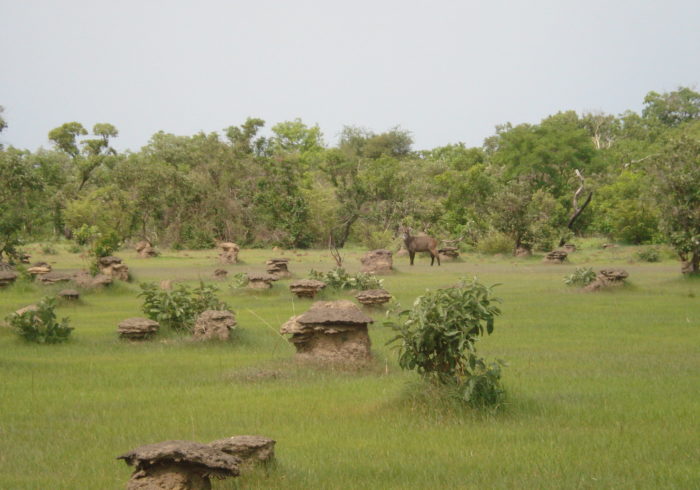
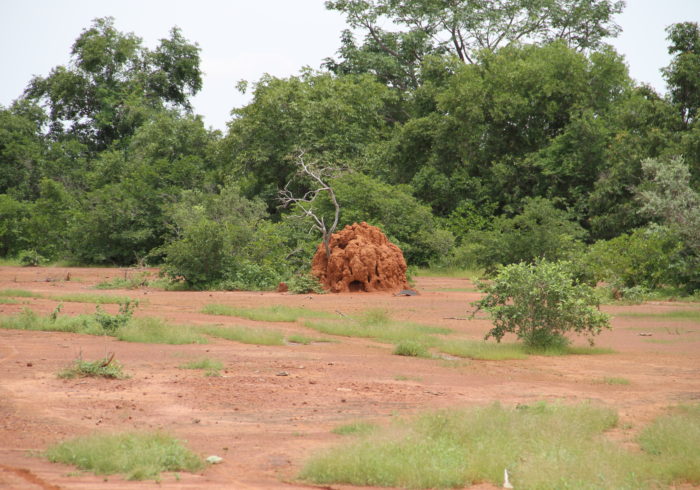
Abstract: My PhD study provided information and knowledge on the plant communities, plant ecology and population structure of the Biosphere Reserve of Pendjari (BRP). An overview of the flora of the BRP showed that plant species composition of 802 plant species distributed among 428 genera and 102 families, was typical of Sudanian savanna. The recorded endemic species of Benin demonstrated the importance of the reserve for plant conservation.

Two major floristic groups correlated with the gradient of soil moisture (drylands versus wetlands).  Clear differences were shown between wetland plant communities while there were similarities between some dryland plant communities. Soil was one of the determining factors of the distribution of plant associations, and soil moisture was one of the main ecological parameters determining the establishment of species and plant association development. Ferruginous soils, poor in organic matter, are dominated on plateau with clay soils. In wetlands, the soils were a deep silty-clay without gravel.

The analysis of regeneration potential of different vegetation types identified in the BRP reflected the overall structure of the tree layer. Fire as main management tool of the BRP and seed viability explained the dominance of Fabaceae (28.8%) in the regeneration. However topography was a key element in plant establishment. Contrary to the floodplains where soils are poorly drained and poorly aerated, preventing good root penetration, plant regeneration was more important on the border of streams and the hill slopes.

The complexity of the regeneration strategy of plant species and factors controlling that, can also be read through the population structure, as the recruitment of seedlings determines the composition of future populations. A comparative analysis of the population structure of Pseudocedrela kotschyi and Terminalia macroptera in pure and mixed stands indicated that young T. macroptera individuals were predominant in both pure and mixed stands. Trees showed weak density and a random pattern. P. kotschyi young individuals were found to be predominant irrespective of standregime. Trees had a higher density and stronger clumped pattern in pure stands as compared to mixed stands.

The diversity and functional attributes of plants were changed but also recovered after disturbance.The secondary succession in the BRP exhibited a clear floristic pattern with a progressive establishment of the woody vegetation. The first state exhibited the highest species richness with 18.6% of all species exclusive to this state and was characterised by the proliferation of widespread species that disappeared by the third state. About 22% of the 233 species recorded were recorded throughout the fallow cycle. The transition from the first to the second state was characterised by the disappearance of 77% of the total species richness.  Maintenance of a certain state of disturbance is important to maintain total plant diversity in the reserve. Organic matter and the species richness were the best discriminating variables of the succession states. The colonisation of the herb layer by Andropogon gayanus var. bisquamulatus(typical Sudanian species) in the third state can be seen as an indication of a substantial return of soil fertility.

Keys words : Ecology, Vegetation structure, soil properties, Pendjari reserve, Benin

  • Vue globale des 5 bâtiments du Laboratoire d’Ecologie Appliquée (LEA). (Photo credit: Dr Akomian Fortuné Azihou / LEA, Octobre 2018)


Eméline Sêssi Pélagie ASSEDE

HIGHLIGHTS

  • Publisher of 14 scientific papers and books
  • Extraordinary lecturer at University of Pretoria
  • Coordinator of research-development projects
  • Member of 5 international scientific groups such as IUFRO, AETFAT
  • Supervisor of MS and BS Students
  • Reviewer of many journals including: Agroforestry systems, Journal of Forestry Research 

CONTACT INFORMATION

01 B.P. 526 Cotonou, Benin

Cell: (229) 97 61 38 29

Fax: (229) 21 30 30 84

E-Mail: [email protected]

EDUCATION

  • Ph.D., University of Abomey-Calavi (Benin), 2014, Major: Agronomy
  • Agricultural Engineering Degree, University of Abomey-Calavi (Benin), 2006, Major: Agronomy & Forestry
  • High School Diploma, Major Biology (Diplôme du Baccalauréat Série Scientifique D), CEG Ste Rita, Benin, 2001

SKILLS, EXPERTISE AND RESEARCH INTEREST

Agroforestry, Agronomy, Applied Ecology, Biodiversity & Conservation, Biodiversity Assessment and Monitoring, Bush Fire Impact on Plant Life Forms, Climate Change Biology, Conservation – Restoration, Conservation Biology, Ecological Modeling, Ecological Restoration, Ecosystem Functioning, Endangered and useful species conservation, Ethnobotany, Forest Conservation, Forest Ecology, Forest Management, Natural Resource Management and Conservation, Nature Conservation, Non-Timber Forest Products Assessment, Plant Biodiversity and Conservation, Plant community ecology, Plant Ecology and Phytosociology, Protected Area Management Assessment, Tropical Ecology and Biology, Vegetation Ecology.

SELECTED GEOGRAPHICAL REGION OF EXPERIENCE

Benin, Burkina Faso, Togo, Afrique du Sud, Mozambique, Malawi.

EXPERIENCE IN RESEARCH

  • National research projects
  • IFS research projects
  • Rufford foundation project

PROFESSIONAL AFFILIATIONS

  • Society for Conservation of Biology (SCB)
  • International Union of Forest Research Organizations (IUFRO)
  • Group for Phytosociological Nomenclature (GPN)
  • Association Béninoise des Pastoralistes (Benin Association of pastoralists)
  • Association pour l’Etude de la Taxonomie de la Flore d’Afrique Tropicale (AETFAT)

PUBLICATIONS

  1. Eméline Sêssi Pélagie Assédé, Chabi Adéyèmi Marc Sylvestre Djagoun, Fortuné Akomian Azihou, Yannick Senakpon Caleb Gogan, Meryas Dègbémabou Kouton, Aristide Cossi Adomou, Coert Johannes Geldenhuys, Paxie Wanangwa Chirwa, Brice Augustin Sinsin. 2018. Efficiency of conservation areas to protect orchid species in Benin, West Africa. South African Journal of Botanic116: 230-237.
  2. Eméline Sêssi Pélagie Assédé, Chabi Adéyèmi Marc Sylvestre Djagoun, Akomian Fortuné Azihou, Meryas Dègbémabou Kouton, Yannick Senakpon Caleb Gogan, Coert Johannes Geldenhuys, Paxie Wanangwa Chirwa and Brice Augustin Sinsin. 2017. Folk perceptions and patterns of use of orchid species in Benin, West Africa. Flora et Vegetatio Sudano-Sambesica 20: 26-36.
  3. Marco Schmidt, Eméline Assédé, Horst Oebel, Jakob Fahr, Brice Sinsin, 2016. Biota of the WAP complex – starting a citizen science project for West Africa’s largest complex of protected areas. Flora et Vegetatio Sudano-Sambesica 19:  3-6.
  4. Gbeffe, A.K., Houehanou, T.D., Habiyaremye, M., Assede, E.S.P., Yaoitcha, A.S., de Bisthoven, L.J., Sogbohossou, E.A., Houinato, M., Sinsin, A.B. (2016). Effects of termite mounds on composition, functional types and traits of plant communities in Pendjari Biosphere Reserve (Benin, West Africa). African Journal of Ecology 1-12.
  5. Émeline Sessi Pélagie Assédé, Fortuné Akomian Azihou, Aristide Cossi Adomou, Madjidou Oumorou, Brice Sinsin. 2015. Effet du relief sur la régénération des espèces ligneuses en zone soudanienne du Bénin. Bois et Forêt des Tropiques 326(4): 15-24.
  6. Fandohan, A. B., A. M. O. Oduor, A. I. Sodé, L. Wu, A. Cuni-Sanchez, E. Assede, and G. N. Gouwakinnou. (2015). Modeling vulnerability of protected areas to invasion by Chromolaena odorata under current and future climates. Ecosystem Health and Sustainability 1(6): 1-12.
  7. Assédé P.S.E, Adomou A.C., Sinsin B. (2012)a. Magnoliophyta, Biosphere Reserve of Pendjari, Atacora, Benin. Check list (8): 642-661.
  8. Assédé P.S.E, Adomou A.C., Sinsin B. (2012)b. Relationship between stand regime and population structure of Pseudocedrela kotschyi (Meliaceae) and Terminalia macroptera (Combretaceae) in the Biosphere Reserve of Pendjari (Benin, West Africa).  International Journal of Biodiversity and Conservation 4(12): 427-438.
  9. Assédé P.S.E, Adomou A.C., Sinsin B. (2012)c. Secondary succession and factors determining change in soil condition from fallow to savannah in the Sudanian Zone of Benin. Phytocoenologia 42 (3 – 4): 181 – 189.

Books

  1. Thierry D. Houenahou,Eméline S.P. Assédé, François Muhashy Habiyaremye, Etotépé A. Sogbohossou, Méryas Kouton, Pierre Onodjè Agbani, Alain S. Yaoitcha, Alain K. Gbeffe et Marcel R. B. Houinato. 2017. La Réserve de Biosphère de la Pendjari (Bénin), Guide & lexique pour le suivi des parcours naturels: Habitats, Faune et Feux. Bruxelles, Belgique – Edition IRSNB – ISSN: 2295-4511– 154 p.
  1. Assédé, E.P.S.,Kouton, M.D, Geldenhuys, C.J., Sinsin, B. 2016. Habitat and Plant Species of the Biosphere Reserve of Pendjari. Cotonou, Bénin – Les Edition Plurielles – ISBN: 978-999192-2-182-2 – 128 p.
  1. Assédé P.S.E, Nago G., Sinsin B. 2013. Les petites mares de la Réserve de Biosphère de la Pendjari. Deutschland, Allemagne (Germany) – Editions Universitaires européennes – ISBN: 978-613-1-56174-0. 113 p.


LAST UPDATED ON: SEPTEMBER 27, 2018