
Ecology of isolated trees in tropical savannas: modelling of plant species distribution and colonization of new habitats through long-distance dispersal and facilitation

PhD Dissertation:

Akomian Fortuné AZIHOU (2013). Ecology of isolated trees in tropical savannas: modelling of plant species distribution and colonization of new habitats through long-distance dispersal and facilitation. University of Abomey-Calavi. Benin. 162 pages.

Promotor: Prof. Brice SINSIN.


Summary: Savannas occupy a fifth of the earth’s land surface and are one of the most sensitive ecosystems to future changes in land use and climate. In tropical Africa, most savannas are intermingled with gallery forests along waterways. A thorough understanding of factors that structure savanna communities is urgently required to guide management effort. The current research aims to (i) predict spatial isolation of tree species from the distribution of tree species along a gallery forest–savanna gradient; (ii) assess theefficiency of isolated gallery-forest trees established in savanna to facilitate the germination and growth of forest woody species beneath their canopies; (iii) analyse the relative importance of morphological traits, dispersal, microhabitat amelioration and biotic interactions in predicting the recruitment of forest species under the crown area of gallery-forest trees isolated in savanna; (iv) assess the importance of functional traits and regional species pool in predicting long-distance dispersal in savanna ecosystems; and (v) predict spatial isolation and colonisation process from spatial patterns of trees, saplings and seedlings in gregarious stands.

The introduction presents a general overview on savanna ecology with emphasis on theories of facilitation and long-distance dispersal in plant communities, and describes the objectives of the study and the organisation of the thesis. Chapter 1 describes the Biosphere Reserve of Pendjari, the study area of the five scientific investigations that form the main body of the dissertation.

In chapter 2, Thresholds Indicator Taxa Analysis (TITAN) was applied to identify abrupt changes in the distribution of tree species and detect the existence of isolated trees at gallery forest – savanna boundaries. The gallery forest-savanna gradient predicted floristic composition of plots with a correlation of 0.595 but its accuracy was locally modified by the occurrence of fire and the physical properties of soil that covered more than 30 % of the range of residuals. The distribution of gallery-forest and savanna tree species did not overlap. Along the gallery forest-savanna gradient, savanna species gradually increased in density while gallery-forest species showed a community threshold at 120 m from the river beyond the width of gallery forest. The forest species driving this trend should have isolated trees that play an important role in the dynamics of gallery forest-savanna boundaries.

Chapter 3 focused on the identification of gallery-forest trees isolated in savanna. It tested the nurse-plant effect and Janzen-Connell hypothesis beneath isolated trees and also examined the relationships between the crown area and the density of seedlings and saplings. Among the eight identified tree species isolated in savanna, only Daniellia oliveri and Khaya senegalensis showed nurse-plant effect and promoted a significant, yet low early recruitment with a seedling-to-sapling survival of 0.044 and 0.578, respectively. The suitability of the subcanopy of isolated trees decreased with the recruitment progression and Janzen-Connell effects were absent. Seedlings had neutral association with the crown area of isolated trees which shifted to positive at the sapling stage. The species of the isolated tree and the crown area explained less than 20 % of total variance, indicating that other predictive factors are important in explaining the nurse-plant effect observed in this study.

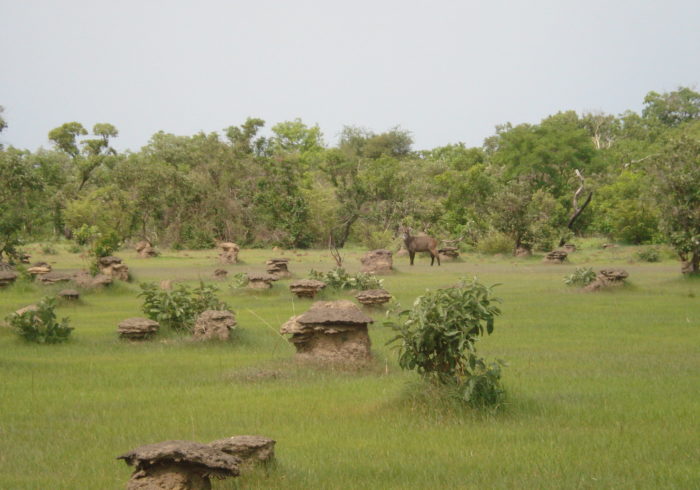
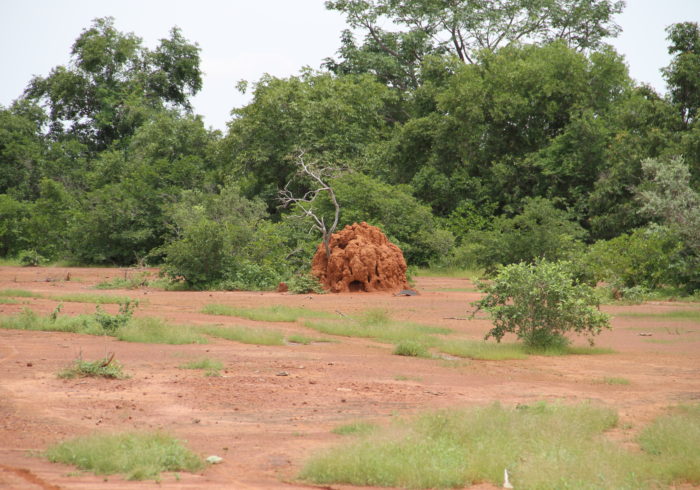
In chapter 4, various regression models were fitted to identify the best candidate for predicting positive plant-plant interactions between isolated trees and their protégés. The number of seedlings and saplings of gallery-forest tree species was recorded beneath 91 isolated trees. Predictor variables included:  diameter at breast height, total height and crown area of isolated trees, height of vegetation surrounding the isolated tree, distance between the isolated tree and the nearest river, height and basal area of termite mounds, C4 grass cover, and number of savanna trees, gallery-forest juveniles, savanna saplings and savanna seedlings under the isolated tree. Negative binomial regression was used for data analysis and model selection was based on Akaike-information-criterion. Abundance of savanna saplings, height of termite mounds and height of isolated tree were important explanatory variables for the abundance of gallery forest seedlings and saplings. Abundance of savanna seedlings and distance to the nearest river were important in predicting abundance of conspecific seedlings and heterospecific seedlings under isolated trees. Abundance of savanna saplings was also significant indicator of microhabitat amelioration. Abiotic and biotic mechanisms which allow early establishment (seedling) also favour persistence (sapling). Both conspecific and heterospecific seedlings and saplings showed similar responses to dispersal, microhabitat amelioration by termites and interaction effects with savanna woody species. Enhanced recruitment of saplings beneath isolated trees will therefore lead to remote forest communities. However, the previous modelling exercise does not give any information on the prediction of the floristic composition of seedling and sapling community beneath isolated trees.

Chapter 5 assesses the importance of functional traits and regional species pool in predicting long-distance dispersal (LDD) from gallery-forest towards isolated trees. It tests theories of coexistence in plant communities; particularly how the inference/dispersal trade-off could explain species assemblages in savanna ecosystems. The maximum height of species explained the highest proportion of variance in species colonization. Morphological dispersal syndromes by wind and birds had poor explanatory importance. Species rare in gallery forest had higher potential to colonize new environments through LDD while abundant species had higher persistence abilities. Contrary to the predictions of the seedling-size effect, small-seeded species dominated the sapling stage.  For both colonization and persistence, increasing dispersal distance is likely to reduce the probability that seeds will reach a suitable habitat beneath isolated trees. The findings reveal the strong dependence of LDD and subsequent colonization and persistence processes on species traits specialized for a variety of dispersal vectors.

Chapters 3 to 5 deals with dicotyledonous isolated trees identified from ecological thresholds in chapter 2. Chapter 6 focuses on Borassus aethiopum, the only one monocotyledon and dioecious species reported to have isolated trees in chapter 2. It investigates the spatial patterns of B. aethiopum and potential convergence between spatial processes in stands and spatial isolation of individual palm adults. We collected map data for palm individuals in three different life history stages, taking into account the sex of adults; other tree species and termite mounds in savanna have been also considered. Spatial analyses were based on the pair correlation function. Juveniles of B. aethiopum were scarce in stands, suggesting the existence of a recruitment bottleneck for the seedling-to-juvenile transition. Seedlings showed an aggregative distribution, while adults had a random pattern or a clumped distribution. All development stages were spatially independent from nutrient-rich patches and spatial segregation of the sex was absent. Seedlings showed spatial patterns independent from female adults; suggesting the prevalence of mammals-mediated dispersal which may explain the existence of isolated trees. Both sexes were equally represented among isolated trees; but seedlings mostly occur in the vicinity of isolated female palms. From these results, we propose a parsimonious scenario explaining spatial isolation of palm trees. Long-distance dispersal of seeds by elephants and baboons increase the probability that heavy seeds bridge long distance and establish adult palms far from stands. The demographic bottleneck at the juvenile stage explains the failure of isolated palms including females to reconstitute small stands around them. Further studies using molecular marker analysis and assignment tests are required to test if seedlings occurring around isolated male palms are a case of ‘rescue effect’.

The last section of this work discusses the major findings and their relevance to literature, implications for conservation and perspectives for future researches. Nurse plants and dispersal from regional species pool could be used to increase establishment of target plant and reduce time required for restoration. Applied nucleation is a promising restoration strategy that can accelerate forest recovery to a similar degree as plantation-style restoration but is more economical. Further researches must go beyond demonstration of the existence of facilitation by investigating evolutionary impacts of facilitation in African savannas. It requires integrating long-term data with spatial data as well as using new methods (molecular marker, stable isotopes, and fluorescent colours) to measure LDD and its implications for metapopulation and metacommunity theories.


  • Vue globale des 5 bâtiments du Laboratoire d’Ecologie Appliquée (LEA). (Photo credit: Dr Akomian Fortuné Azihou / LEA, Octobre 2018)

Akomian Fortuné AZIHOU

 HIGHLIGHTS

  • Senior Lecturer, Faculty of Agronomic Sciences, University of Abomey-Calavi
  • Coordinator of Scientific Seminars, Laboratory of Applied Ecology
  • Coordinator of Unmanned Aerial Vehicle Operations, Laboratory of Applied Ecology
  • Publisher of 25 scientific papers
  • Supervisor of 10 PhD candidates, 15 MSc and 3 BSc students
  • Member of scientific groups such as IUCN-WCPA, International Association for Landscape Ecology
  • Reviewer of many journals including: Forest Ecology and Management, Restoration Ecology, South African Journal of Botany, African Journal of Ecology
  • Member of the French – English Translation Committee, Faculty of Agronomic Sciences, University of Abomey-Calavi


CONTACT INFORMATION

01 B.P. 532 Cotonou, Benin

Cell: (229) 65 87 80 16

Fax: (229) 21 30 30 84

E-Mail: [email protected]

[email protected]


EDUCATION

  • Ph.D., University of Abomey-Calavi (Benin), 2013, Major: Management of Natural Resources
  • Agricultural Engineering Degree, University of Abomey-Calavi (Benin), 2008, Major: Management of Natural Resources
  • High School Diploma, Major Mathematics and Physics (Diplôme du Baccalauréat Série Scientifique C), CEG Allada, Benin, 2003


SKILLS, EXPERTISE AND RESEARCH INTEREST

Agriculture, Agroforestry, Agronomy, Applied Ecology, Biodiversity Assessment and Monitoring, Conservation Biology, Ecological Modeling, Ecological Restoration, Ecological Statistics, Unmanned Aerial Vehicle, Psychology and Conservation, Ecosystem Ecology, Ecosystem Functioning, Endangered and useful species conservation, Forest Conservation, Forest Ecology, Forest Management, Landscape Ecology, Management of Rangelands and of Protected Area, Natural Resource Management and Conservation, Non-Timber Forest Products Assessment, Plant Biodiversity and Geography, Plant community ecology (Phytosociology).


SELECTED GEOGRAPHICAL REGION OF EXPERIENCE

Benin, Niger, Togo


EXPERIENCE IN RESEARCH

  • Small grants: Rufford Small Grant for Conservation, IFS Collaborative Research Grant, West African Economic and Monetary Union (UEMOA) Research Grant for Excellence
  • Research Funding Programme of the University of Abomey-Calavi
  • National research projects (ONAB, FNRSIT)
  • Bilateral projects: France (IRD-JEAI), Germany (LOEWE)


PROFESSIONAL AFFILIATIONS

  • International Association for Landscape Ecology
  • Association for Tropical Biology and Conservation
  • International Union for Conservation of Nature
  • World Commission on Protected Areas
  • Beninese Association of Pastoralism


SELECTED HONORS AND AWARDS

  • Nomination as Affiliate by the African Academy of Sciences for the period 2016 – 2020
  • Member, Expert Assessment Groups – Green List supervised by the World Commission on Protected Areas (WCPA) for the IUCN Green List of Protected and Conserved Areas initiative


PUBLICATIONS

  • Guidigan M. L. G., Azihou F., Idohou R., Okhimanhe A. A., Fandohan A. B.,  Sinsin B. and Adet L., 2018. Modelling the current and future distribution of Kigelia africana under climate change in Benin, West Africa. Modeling Earth Systems and Environment4: 1225 – 1238.
  • Amahowe O. I., Azihou A. F., Natta K. A., Biaou S. S. H., Biaou S., Agoï D-D and Balogoun S., 2018. Constraints of seedling survival and recruitment under adult tree of a multi-use species Afzelia africana Sm and Pers in Sudanian region of Benin (West Africa). Agroforestry Systemshttps://doi.org/10.1007/s10457-018-0218-6.
  • Guidigan M. L. G., Azihou F., Okhimanhe A. A., Sinsin B., Usman B. S. and Adet L., 2018. Examining the effectiveness of a protected areas network in the conservation of Kigelia africanaunder climate change by 2050 in Benin. Open Access Library Journal5: e4326.
  • Assédé E. S. P., Djagoun C. A. M. S., Azihou F. A., Gogan Y. S. C., Kouton M. D., Adomou A. C., Geldenhuys C. J., Chirwa P. W. and Sinsin B., 2018. Efficiency of conservation areas to protect orchid species in Benin, West Africa. South African Journal of Botany116: 230 – 237.
  • Sèwadé C., Lokonon B. E., Azihou A. F., Akouèhou G. S., Mensah G. A., Glèlè Kakaï R. L. and Houinato M. R. B., 2018. Use diversity and farmer’s preference of 48 local multipurpose fodder trees: a comparative analysis of three sociolinguistic groups of Benin. Annales des Sciences Agronomiques22 : 33 – 52.
  • Bucksch A., Atta-Boateng A., Azihou A. F., Battogtokh D., Baumgartner A., Binder B. M., Braybrook S. A., Chang C., Coneva V., DeWitt T. J., Fletcher A. G., Gehan M. A., Diaz -Martinez D. H., Hong L., Iyer-Pascuzzi A. S., Klein L. L., Leiboff S., Li M., Lynch J. P., Maizel A., Maloof J. N., Markelz R. J. C., Martinez C. C., Miller L. A., Mio W., Palubicki W., Poorter H., Pradal C., Price C. A., Puttonen E., Reese J. B., Rellán-Álvarez R., Spalding E. P., Sparks E. E., Topp C. N., Williams J. H. and Chitwood D. H., 2017. Morphological plant modeling: unleashing geometric and topological potential within the plant sciences. Frontiers in Plant Science8: 900. doi: 10.3389/fpls.2017.00900
  • Sèwadé C., Azihou A. F., Fandohan A. B., Glèlè Kakaï R. L., Mensah G. A. and Houinato M. R. B., 2017. Leaf biomass modeling, carrying capacity and species-specific performance in aerial fodder production of three priority browse species Afzelia africanaPterocarpus erinaceus and Daniellia oliveri in Benin. Livestock Research for Rural Development, 29: Article #192.  http://www.lrrd.org/lrrd29/10/sewa29192.html
  • Fandohan A. B., Azihou A. F., Asssogbadjo A. E., Fonton N. H., Sinsin A. B. and van Damme P., 2017. Environment-driven spatial pattern of tamarind trees in riparian forests. Journal of Agriculture and Environment for International Development111: 23 – 37. doi: 10.12895/jaeid.20171.499
  • Andronache I., Fensholt R., Ahammer H., Ciobotaru A-M., Pintilii R-D., Peptenatu D., Drăghici C-C., Diaconu D. C., Radulović M., Pulighe G., Azihou A. F., Toyi M. S. and Sinsin B., 2017. Assessment of textural differentiations in forest resources in Romania using fractal analysis. Forests8: 54. doi:10.3390/f8030054
  • Houndonougbo J. S. H., Salako V. K., Idohou R., Azihou F. A., Assogbadjo A. E. and Glèlè Kakaï R., 2017. Local perceptions of elephant-Borassus aethiopum Mart. (Arecaceae) interactions in the Pendjari National Park in Benin. Bois et Forêts des Tropiques331: 7 – 17.
  • Hounkpèvi A., Azihou A. F., Kouassi E. K., Porembski S. and Glèlè Kakaï R., 2016.Climate-induced morphological variation of black plum (Vitex doniana Sw.) in Benin, West Africa. Genetic Resources and Crop Evolution, 63: 1073 – 1084.
  • Idohou R., Assogbadjo A. E., Azihou F., Glèlè Kakaï R. and Adomou A., 2016. Influence of the landscape context on stand structure and spatial patterns of the doum palm (Hyphaene thebaicaMart.) in the Republic of Benin (West Africa). Agroforestry Systems90: 591 – 605.
  • Sèwadé C., Azihou A. F., Fandohan A. B., Houéhanou T. D. et Houinato M., 2016. Diversité, priorité pastorale et de conservation des ligneux fourragers des terres de parcours en zone soudano-guinéenne du Bénin. BASE20: 113 – 129.
  • Salako V. K., Azihou A. F., Assogbadjo A. E., Houéhanou T. D., Kassa B. D. and Glèlè Kakaï R. L., 2016. Elephant-induced damage drives spatial isolation of the dioecious palm Borassus aethiopum Mart. (Arecaceae) in the Pendjari National Park, Benin. African Journal of Ecology54: 9 – 19.
  • Assédé E. S. P., Azihou F. A., Adomou A. C., Oumorou M. et Sinsin B., 2015. Effet du relief sur la régénération des espèces ligneuses en zone soudanienne du Bénin. Bois et Forêts des Tropiques326: 15 – 24.
  • Donou Hounsode M. T., Glèlè Kakaï R., Azihou A. F.and Ouédraogo A., 2015. Efficiency of inventory plot patterns for the estimation of woody vegetation recruit density in a tropical dense forest in Benin. African Journal of Ecology, 53: 355 – 361.
  • Azihou A. F., Glèlè Kakaï R. and Sinsin B., 2014. Importance of functional traits and regional species pool in predicting long-distance dispersal in savanna ecosystems. Plant Ecology215: 651 – 660.
  • Kassa B. D., Fandohan B., Azihou A. F., Assogbadjo A. E., Oduor A. M. O., Kidjo F., Babatounde S., Liu J. and Glele Kakai R., 2014. Survey of Loxodonta africana (Elephantidae)-caused bark injury on Adansonia digitata (Malvaceae) within Pendjari Biosphere Reserve, Benin. African Journal of Ecology52: 385–394.
  • Azihou A. F., Glèlè Kakaï R. and Sinsin B., 2013. Do isolated gallery-forest trees facilitate recruitment of forest seedlings and saplings in savanna? Acta Oecologica53: 11 – 18.
  • Azihou A. F., Glèlè Kakaï R., Bellefontaine R. and Sinsin B., 2013. Distribution of tree species along a gallery forest–savanna gradient: patterns, overlaps and ecological thresholds. Journal of Tropical Ecology29: 25 – 37.
  • Lokonon B. E., Bonou W. N., Kassa B., Azihou A. F., Assogbadjo A. E. and Glèlè Kakaï R., 2013. Structural and ethnobotanical characterization of Velvet Tamarind (Dialium guineense Willd), a multipurpose tree species. Agronomie Africaine25: 121 – 131.
  • Assogbadjo A. E., Glèlè Kakaï R., Adjallala F. H., Azihou A. F., Vodouhê G. F., Kyndt T. and Codjia J. T. C., 2011. Ethnic differences in use value and use patterns of the threatened multipurpose scrambling shrub (Caesalpinia bonduc L.) in Benin. Journal of Medicinal Plant Research5: 1549 – 1557.
  • Vodouhè R., Dansi A., Avohou T. H., Kpèki B. and Azihou F., 2011. Plant domestication and its contributions to in situ conservation of genetic resources in Benin. International Journal of Biodiversity and Conservation3: 40 – 56.s.


LAST UPDATED ON: SEPTEMBER 21, 2018